Web Browser Market Share (November 2026 Report)


Google Chrome remains the undisputed global leader among web browsers, commanding over 68% of usage across all devices, while Apple’s Safari holds a firm second place thanks to its strong presence on iPhones, iPads, and Macs. Microsoft Edge secures third, bolstered by its deep integration with Windows.
The data also uncovers how browser preferences differ on desktop, mobile, and tablet devices worldwide, and how U.S. trends diverge from global patterns. From Chrome’s overwhelming global dominance to Safari’s mobile strength and the gradual rise of privacy-focused browsers like Brave, this breakdown highlights how user behavior, device ecosystems, and operating system defaults continue to shape the way the world browses the internet.
Browser Market Share Globally (Across All Devices)
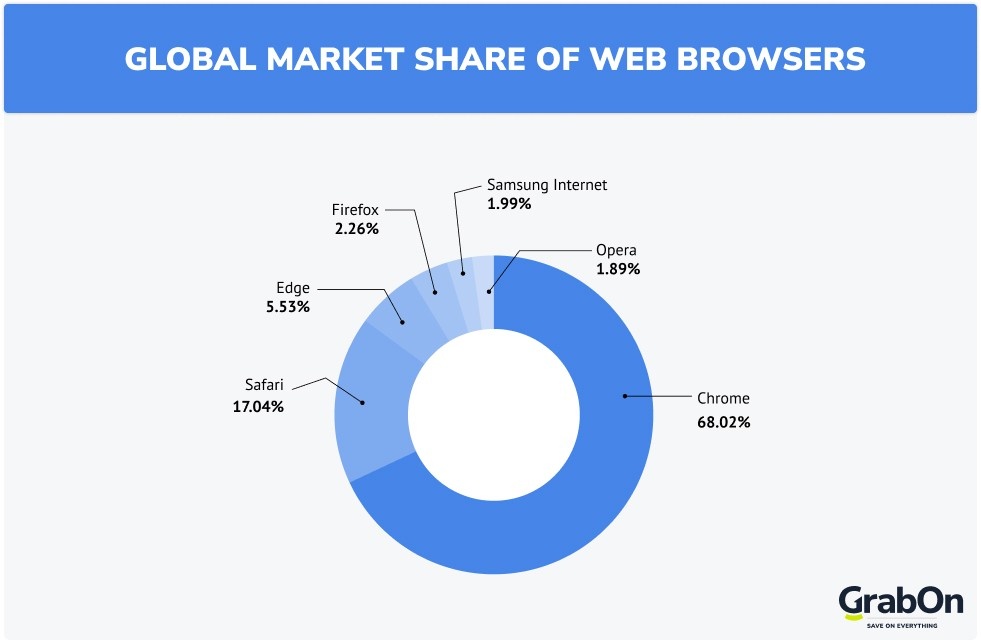
With 68.02% market share, Google Chrome is the most used web browser globally. Apple’s Safari is the second biggest player with a 17.04% market share, while Microsoft’s Edge makes it to the top 3 with a 5.53% market share.
Here is a table showing the global market share of web browsers:
| Browser | Global Market Share |
| Chrome | 68.02% |
| Safari | 17.04% |
| Edge | 5.53% |
| Firefox | 2.26% |
| Samsung Internet | 1.99% |
| Opera | 1.89% |
Desktop Browser Market Share Globally
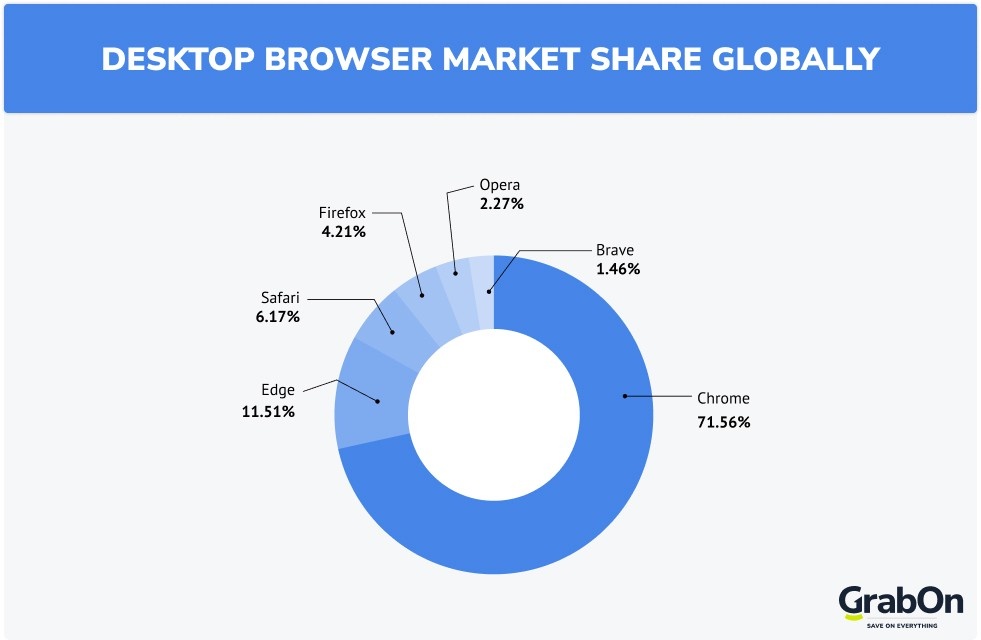
With 71.56% market share, Google Chrome dominates the global desktop browser market, reflecting its deep integration with Windows, which holds 63.66% of the desktop operating system market. As Chrome is widely adopted across both Windows and macOS systems, its overwhelming lead underscores Google’s continued dominance in cross-platform browsing.
Microsoft Edge, with 11.51%, benefits from being the default browser on Windows devices, directly correlating with Windows’ market share. Its close alignment with the Windows ecosystem has helped Edge maintain a strong second position globally.
Apple’s Safari, at 6.17%, closely mirrors the combined OS X and macOS share of 12.56%, highlighting its exclusivity to Apple’s desktop environment. Meanwhile, Firefox (4.21%) and Opera (2.27%) retain smaller but consistent user bases, appealing to those who value customization and alternative browsing experiences.
Brave, though newer, has carved out a niche with 1.46%, driven by its focus on privacy and ad-blocking features.
| Browser | Market Share |
| Chrome | 71.56% |
| Edge | 11.51% |
| Safari | 6.17% |
| Firefox | 4.21% |
| Opera | 2.27% |
| Brave | 1.46% |
Mobile Browser Market Share Globally
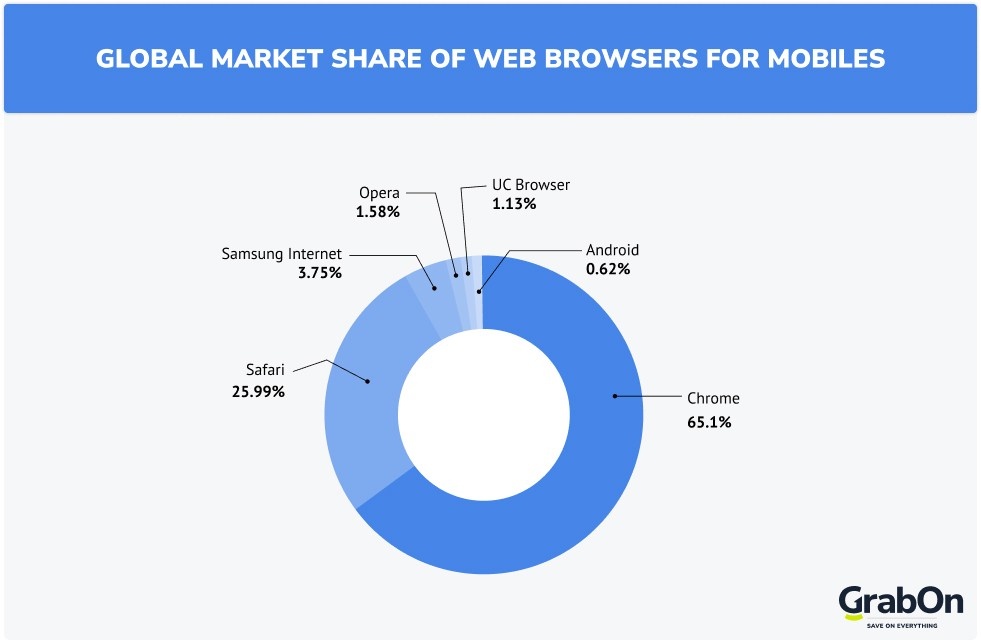
With 65.1% market share, Google Chrome leads the global mobile browser market, which closely aligns with Android’s dominance at 67.35% among mobile operating systems. Since Chrome is the default browser on most Android devices, its wide reach is a direct reflection of Android’s global user base.
Apple’s Safari, holding 25.99% of the browser market, also mirrors iOS’s 32.55% share, showing how tightly Safari’s usage is tied to Apple’s ecosystem. Samsung Internet follows with 3.75%, supported by Samsung’s own OS layer and user preference on Galaxy devices.
Other browsers, such as Opera (1.58%), UC Browser (1.13%), and Firefox (0.62%) continue to maintain smaller yet consistent segments, catering mostly to specific regions or older Android versions.
Here is a table showing the global market share of web browsers for mobiles:
| Browser | Market Share |
| Chrome | 65.1% |
| Safari | 25.99% |
| Samsung Internet | 3.75% |
| Opera | 1.58% |
| UC Browser | 1.13% |
| Firefox | 0.62% |
Tablet Browser Market Share Globally
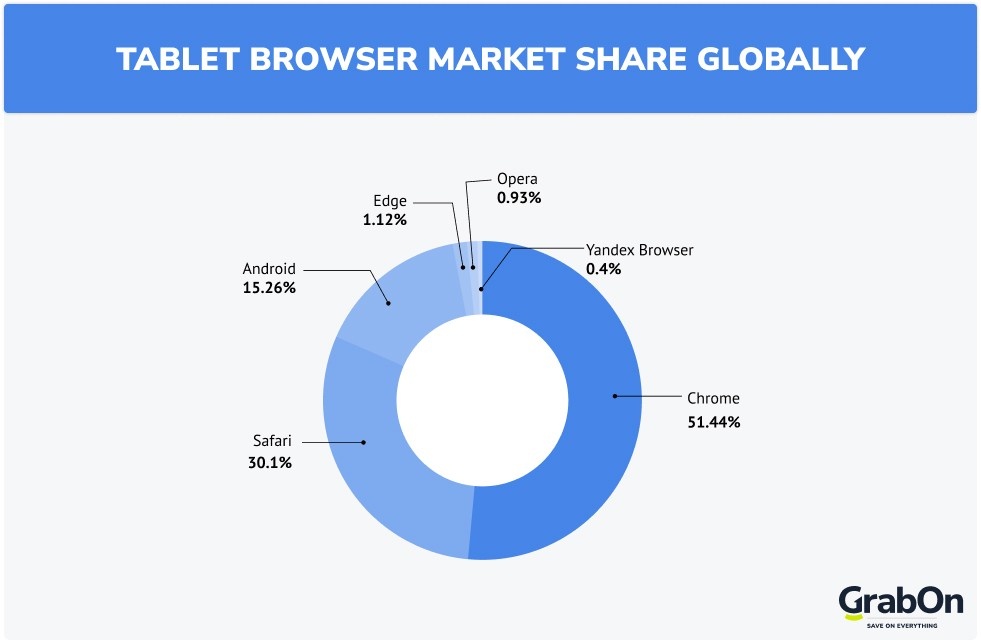
With a 51.44% market share, Google Chrome leads the global tablet browser market. Apple’s Safari follows closely with 30.1%, continuing its dominance among iPad users. Android Browser ranks third with 15.38%, while Microsoft Edge, Opera, and Yandex Browser hold smaller shares at 1.12%, 0.93%, and 0.4%, respectively.
Here is a table showing the global market share of web browsers for tablets:
| Browser | Market Share |
| Chrome | 51.44% |
| Safari | 30.1% |
| Android | 15.38% |
| Edge | 1.12% |
| Opera | 0.93% |
| Yandex Browser | 0.4% |
Browser Market Share Across All Devices in The United States
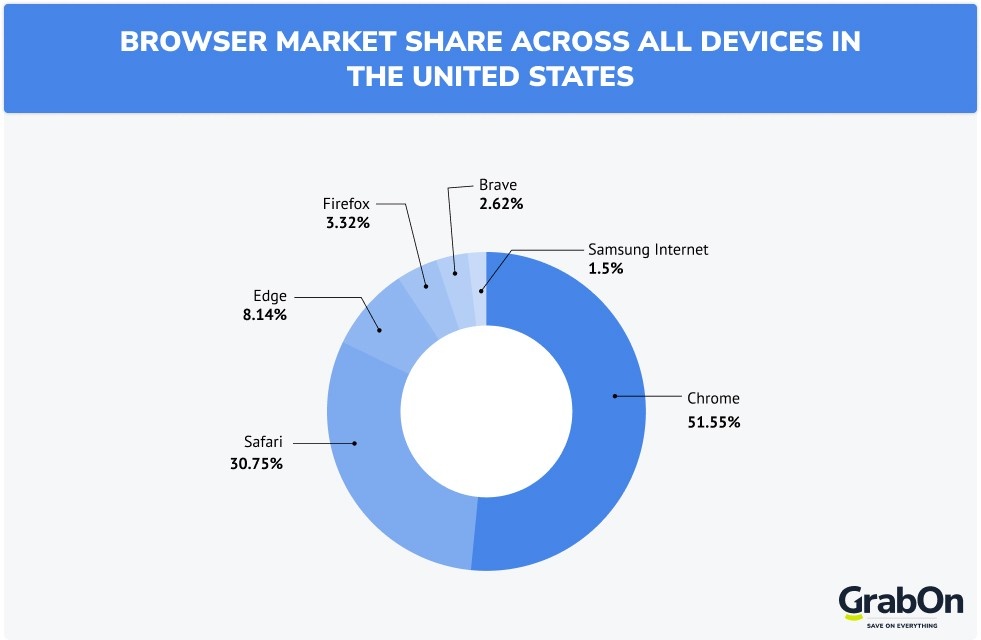
The browser market share data for the United States shows a clear dominance by Chrome, which holds 51.55% of the market across all devices. This means that just over five out of every ten internet users in the US prefer Chrome for browsing, driven largely by its speed, extensive extension ecosystem, and seamless integration with Google services.
Safari comes in second at 30.75%, which reflects strong iPhone and Mac usage in the country. Together, Chrome and Safari control more than 82% of the US browser market.
Edge (8.14%) and Firefox (3.32%) follow, showing that Microsoft and Mozilla maintain loyal, but much smaller, segments. Edge’s share is largely supported by its position as the default browser on Windows machines, but it still trails far behind Chrome and Safari. Brave (2.62%) and Samsung Internet (1.5%) cater to niche audiences, Brave to privacy-focused users, and Samsung Internet mostly on Samsung devices. Their low shares indicate that while alternatives exist for specialized needs, most users stick with major, default browsers.
| Browser | Market Share |
| Chrome | 59.34% |
| Safari | 25.10% |
| Edge | 6.38% |
| Firefox | 3.65% |
| Brave | 2.18% |
| Samsung Internet | 1.32% |
| Browser | Market Share |
| Chrome | 51.55% |
| Safari | 30.75% |
| Edge | 8.14% |
| Firefox | 3.32% |
| Brave | 2.62% |
| Samsung Internet | 1.5% |
Desktop Browser Market Share In The United States
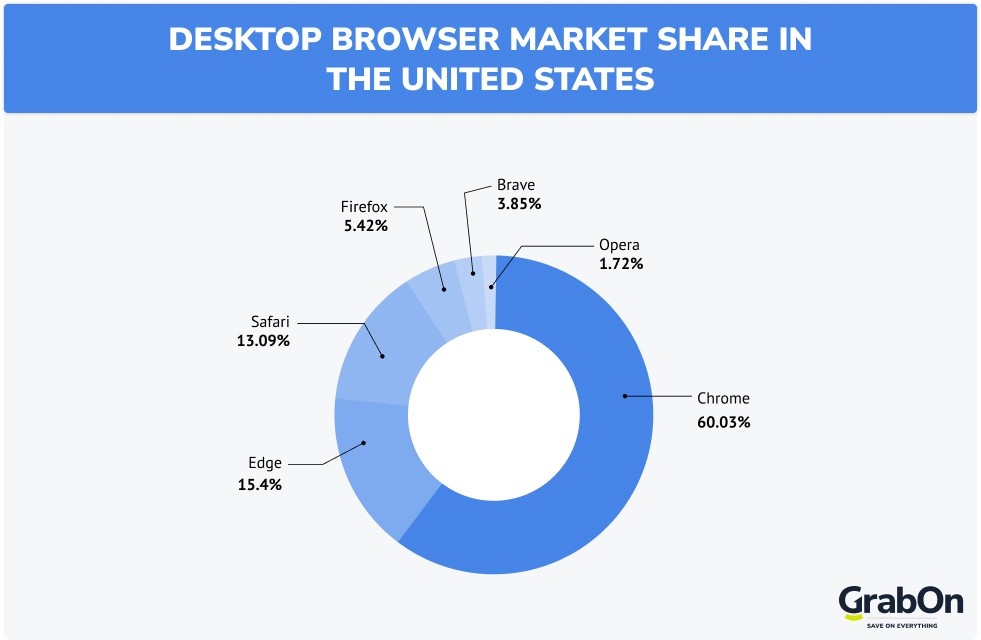
The desktop browser market share in the United States is dominated by Google Chrome, which accounts for 60.03% of users. Microsoft Edge is the second most popular desktop browser with a 15.4% share. Its position as the default browser on modern Windows computers boosts its user base, but it has not managed to challenge Chrome’s lead. Apple Safari, at 13.09%, primarily serves Mac users, reflecting Apple’s niche yet loyal desktop audience. Firefox, with 5.42%, appeals to users who value privacy and open-source principles, but it remains a small slice of the US desktop segment.
Brave (3.85%) and Opera (1.72%) cater to even smaller communities, mainly targeting users who seek privacy and unique browsing features. Overall, these statistics show that desktop browsing habits are heavily centered around Chrome, with alternatives making up only a small portion of the market.
| Browser | Market Share |
| Chrome | 60.03% |
| Edge | 15.4% |
| Safari | 13.09% |
| Firefox | 5.42% |
| Brave | 3.85% |
| Opera | 1.72% |
Mobile Browser Market Share In The United States
The mobile browser market share in the United States reveals important insights into user preferences and platform dominance. Safari leads with 54.69% market share, reflecting the dominant presence of Apple iPhones among mobile users in the US. Safari’s position benefits from being the default browser on iOS devices, which constitute a large portion of the mobile market.
Google Chrome follows at 38.18%, showcasing strong usage across Android devices and also substantial adoption on iOS, where users can install alternative browsers despite the default Safari setting. This share indicates that Chrome’s cross-platform capabilities and integration with Google services make it highly popular among diverse mobile users.
Samsung Internet holds 2.52%, which is significant given its association primarily with Samsung devices, the largest Android manufacturer in the US. Privacy-focused browsers like Brave (1.54%) and Firefox (1.4%) have smaller but notable shares, as some users prioritize privacy and enhanced browsing features. Opera, at 0.62%, retains a niche audience as well.
Overall, this data highlights that mobile browsing in the US is mainly split between Safari and Chrome, driven by Apple and Google’s respective ecosystems. For app developers and marketers, optimizing websites and apps for these two browsers ensures the broadest reach and best user experience on mobile devices.
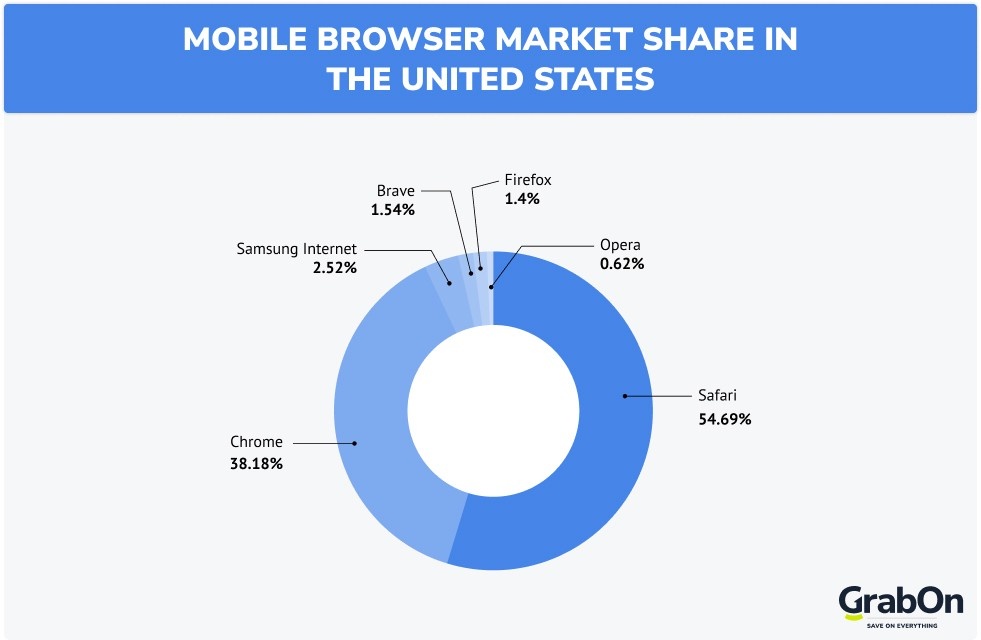
| Browser | Market Share |
| Safari | 54.69% |
| Chrome | 38.18% |
| Samsung Internet | 2.52% |
| Brave | 1.54% |
| Firefox | 1.4% |
| Opera | 0.62% |
Tablet Browser Market Share In The United States
Chrome is the leading tablet browser, preferred by 42.76% of users, which demonstrates Google’s strong presence on these devices. Safari comes in second with 35.17%, largely due to its default status on iPads.
The Android browser serves 19.99% of users, showing its ongoing relevance, especially for tablets running stock Android. Edge, Opera, and Yandex Browser have notably smaller shares at 1.09%, 0.54%, and 0.17% respectively, indicating that most tablet users opt for mainstream, pre-installed browsers over smaller alternatives.
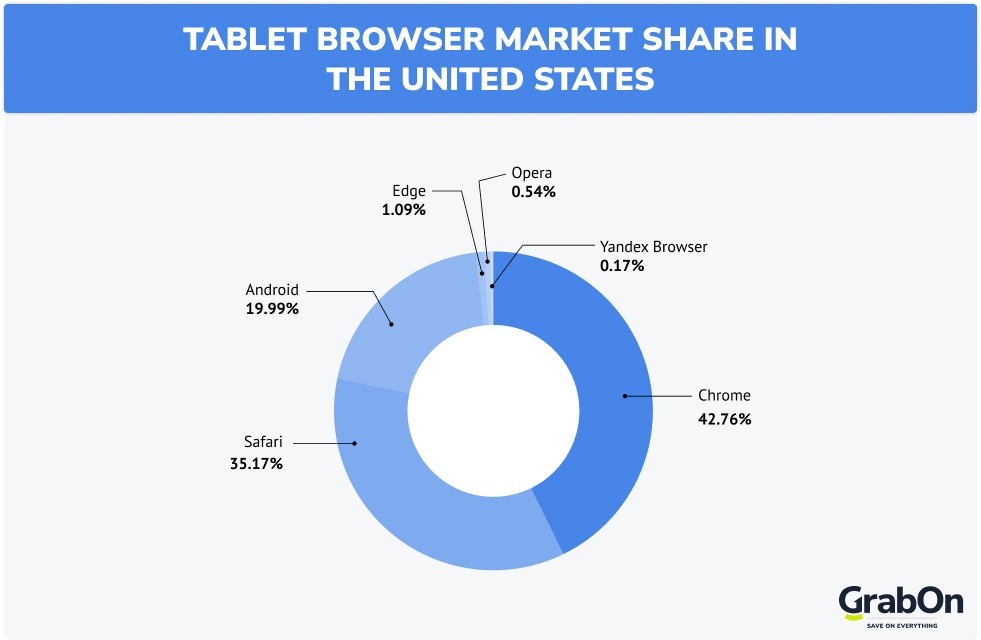
| Browser | Market Share |
| Chrome | 42.76% |
| Safari | 35.17% |
| Android | 19.99% |
| Edge | 1.09% |
| Opera | 0.54% |
| Yandex Browser | 0.17% |