Local Shpping Statistics (2026): Economic Impact aond Trends

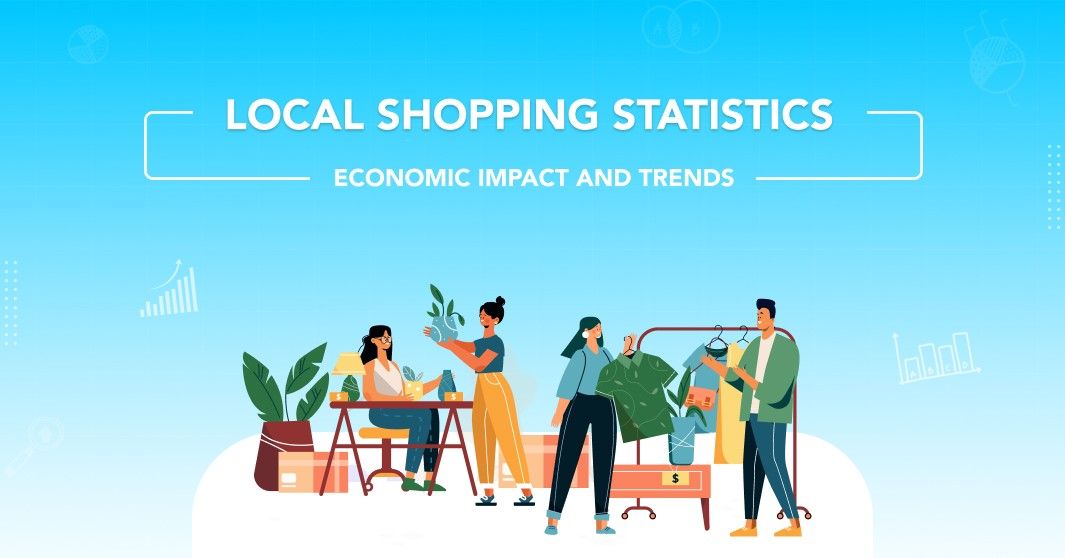
Shopping locally means you’re contributing to your community and locality. It has a more significant footprint than just buying groceries or a gift from a shop. For every $100 spent at a local shop, nearly two-thirds stays within the community in the form of wages, taxes, and support for other small businesses. Whereas, money spent at large chains or multinational corporations often leaves the community, flowing out with little reinvestment at the local level.
Local businesses tend to hire within the community, source from nearby suppliers, and reinvest profits into neighborhood development. That’s why consumers across the U.S. and increasingly around the globe are leaning towards local shopping.
In this blog, we’ll explore key statistics on shopping local, consumer shifts, and what it means for the future of local shopping and farmers’ markets.
Shopping Locally Statistics: Top Picks
- Over 65% of Americans visit their local Main Street businesses a few times a month.
- $100 spent at a local business generates 70% more economic activity than if spent at a chain retailer.
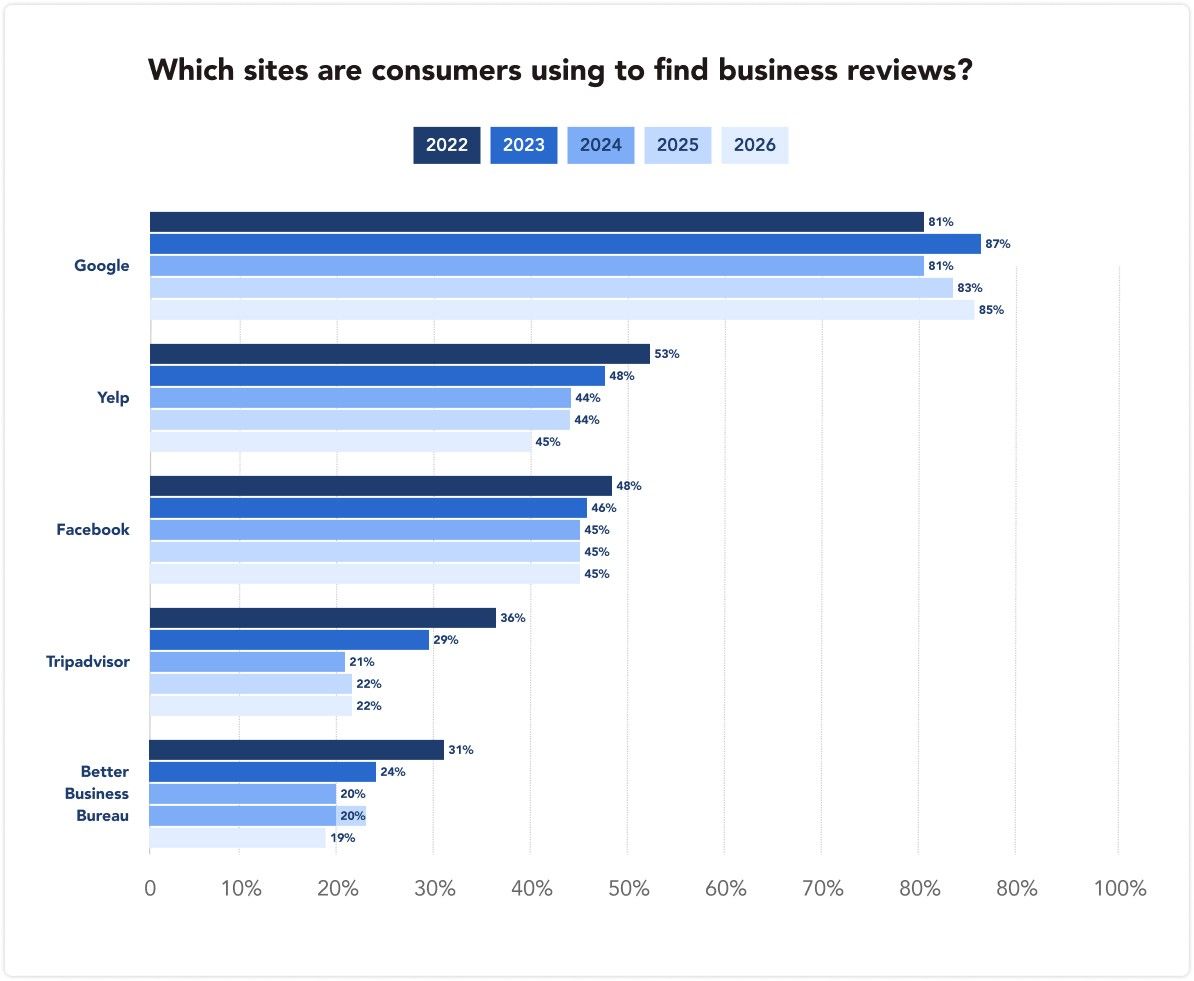
- 85% of U.S. consumers use Google to find local business reviews in 2026.
- The U.S. has over 8,700 farmers’ markets.
Why Local Shopping Resonates With Consumers
Shopping local fuels community survival, builds stronger economies, and drives job creation. By keeping money circulating close to home, local businesses help create a ripple effect that strengthens neighborhoods, supports families, and sustains the community. Here are some statistics to show why consumers prefer shopping local.
Local Shops Have Emotional Connections
- When a local shop closes, 75% of consumers reported feeling sad, worried, guilty, or angry. These emotions highlight the strong personal ties people form with local businesses, which often become a huge part of neighborhoods.
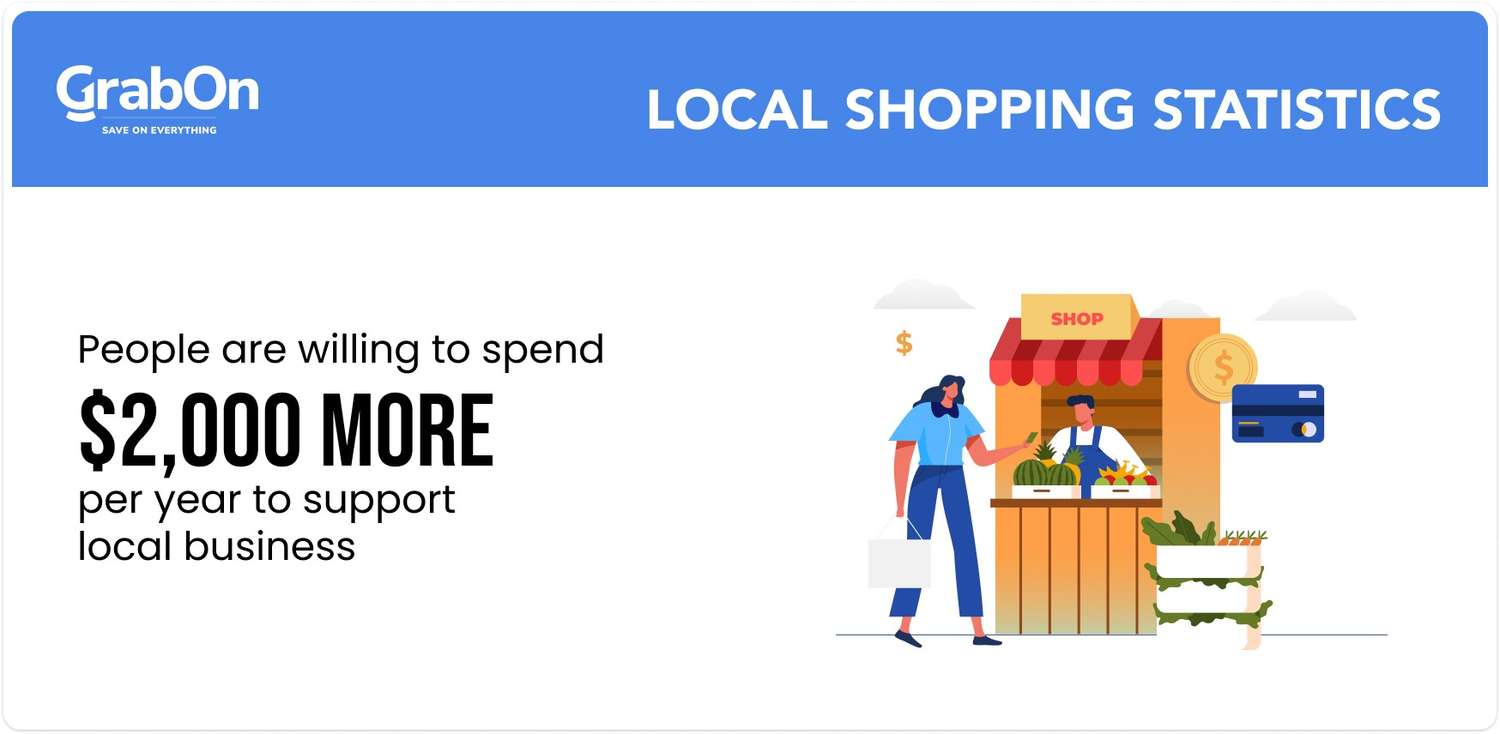
- Consumers have said they’d spend nearly $2,000 more per year just to keep local businesses alive.
Economic Resilience
- A recent study in the USA shows that local retailers return 52% of their revenue to the local economy, compared with only 14% for chain stores.
Why? Local shops pay local employees, use regional suppliers, and spend on local services (like accountants, builders, and designers). This “money multiplier effect” helps keep communities self-sufficient.
Local Shops Contribute to Job Creation
- Small businesses are job powerhouses. More than 60% of Amazon’s U.S. sales come from independent sellers.
- Most small and medium-sized businesses tied with Amazon support over 1.5 million jobs.
Shopping Local Trends
Demand for locally owned businesses is growing, leading to the rise of farmers’ markets and digital tools that support neighborhood shops. Rather than focusing solely on price, shoppers are prioritizing trust, sustainability, and community impact, making local businesses grow. Here are some of the strongest trends driving this change.
There’s a Growing Preference for Local Ownership
- Globally, 47% of consumers say locally owned companies influence their purchase decisions, and this trend has spiked in Canada and the U.S.
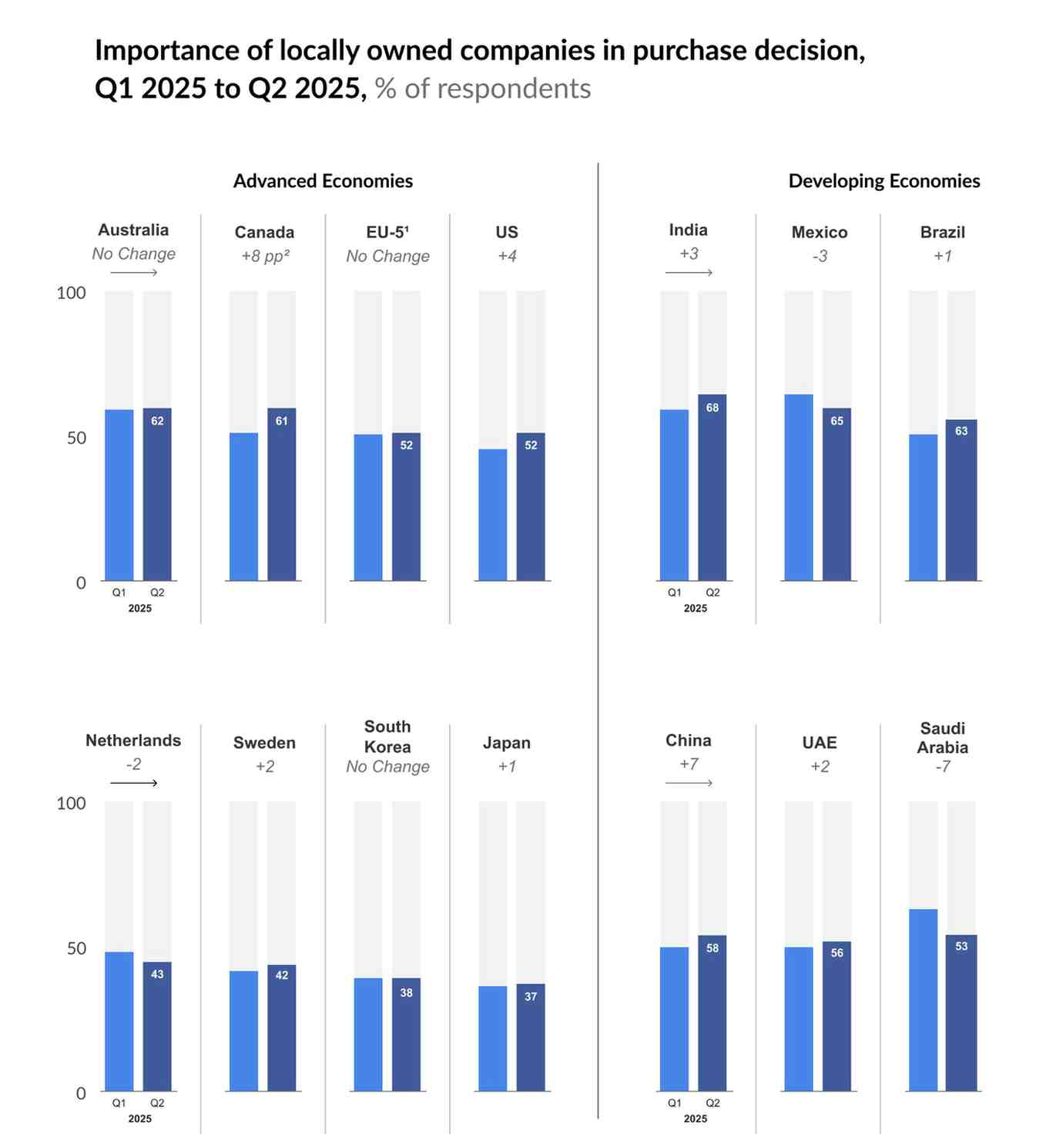
- The reason for the growing popularity of local businesses? Global problems like supply chain issues, tariffs, and politics have shaken confidence in multinational corporations. Consumers now prefer businesses they feel connected to, those they know will remain reliable in uncertain times.
| Want to know how traditional retail is holding its ground? Check out these Brick-and-Mortar Shopping Retail Statistics on GrabOn for insights into physical stores, in-store sales figures, and evolving shopper habits. |
Consumers Choose Values Over Price
- Surprisingly, affordability is not the main driver for shopping locally. Globally, 36% simply want to support domestic businesses.
- 20% of consumers shop locally because they believe local brands suit their needs better.
- 13% of consumers said affordability was their main reason for not preferring local shops.
This shows that local shopping is more about shared values, trust, and product fit than bargain-hunting.
(Source: McKinsey)
Farmers’ Market Statistics
Farmers’ markets are a huge part of local shopping in the U.S. They bring local farmers, artisans, and small businesses together to sell products directly to customers.
- There are over 8,700 farmers’ markets in the USA where nearly 40,000 farmers sell directly to consumers.
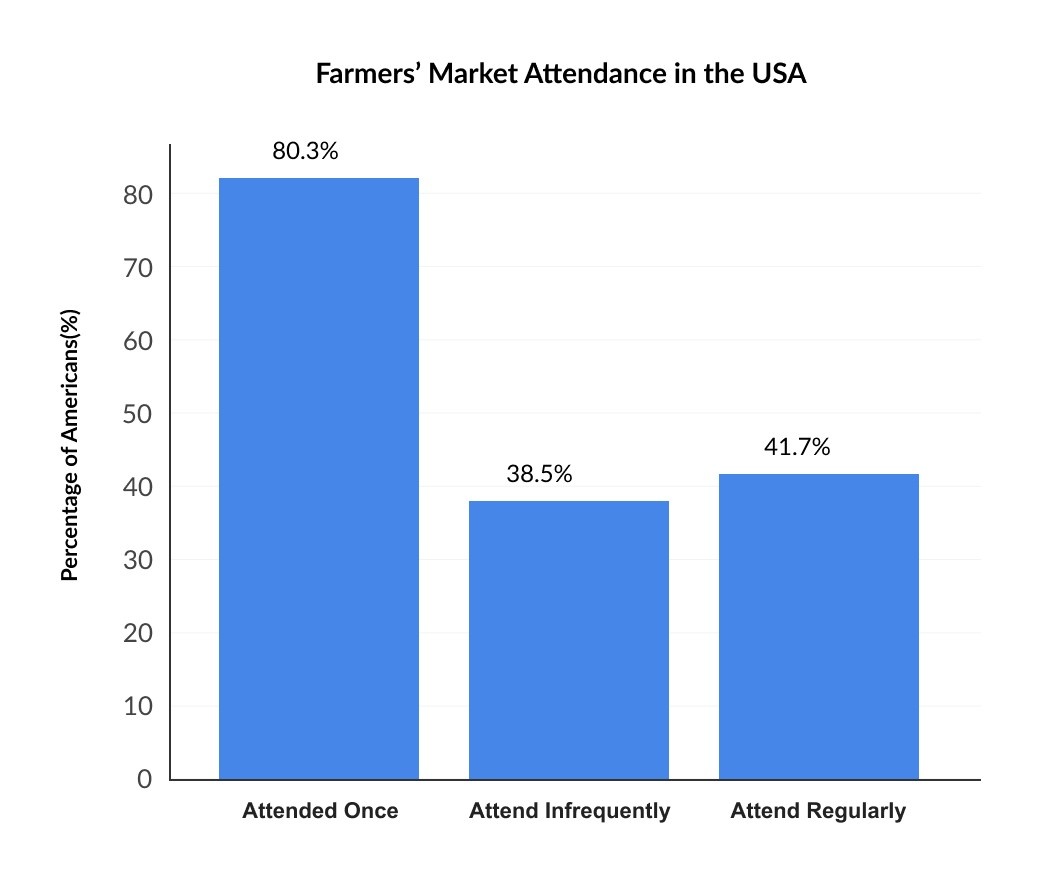
- 80.3% of Americans have attended a farmers’ market at least once in the past year, 38.5% attend infrequently (five or fewer times annually), and 41.7% attend regularly (six or more times annually).
Why people attend farmers’ markets:
- To buy fresh food directly from farmers
- To support local agriculture and family farms
- For higher-quality and unique products
- To enjoy a fun, community-oriented experience
The biggest barrier? Forgetting about them. Studies show that reminders and awareness campaigns could greatly boost attendance.
Farmers’ Market Shopping Behaviors
- 81% of consumers purchase fresh vegetables, making produce the most popular category at farmers’ markets.
- About 59% of shoppers get bakery items, showing the growing demand for freshly baked goods as part of the local market experience.
- Nearly 41% of Americans purchase cheese at farmers’ markets. This shows a growing interest in artisanal and locally sourced dairy products.
- Around 37% of consumers buy fruit, often preferring freshness and seasonal variety that supermarkets may not provide.
Farmers’ Market Payment Preferences
- Among younger shoppers aged 18 to 49, 57% reported using Venmo as a payment method, highlighting the importance of integrating digital transactions at markets.
- 63% of those aged 18 to 49 use PayPal for purchases at farmers’ markets.
Why this shift? Younger consumers expect the convenience of digital payments even in traditional spaces. Markets that adopt these methods attract a broader and younger audience.
(Source: Journal of Agriculture and Food Chemistry)
Consumer Preferences: Reviews & Content
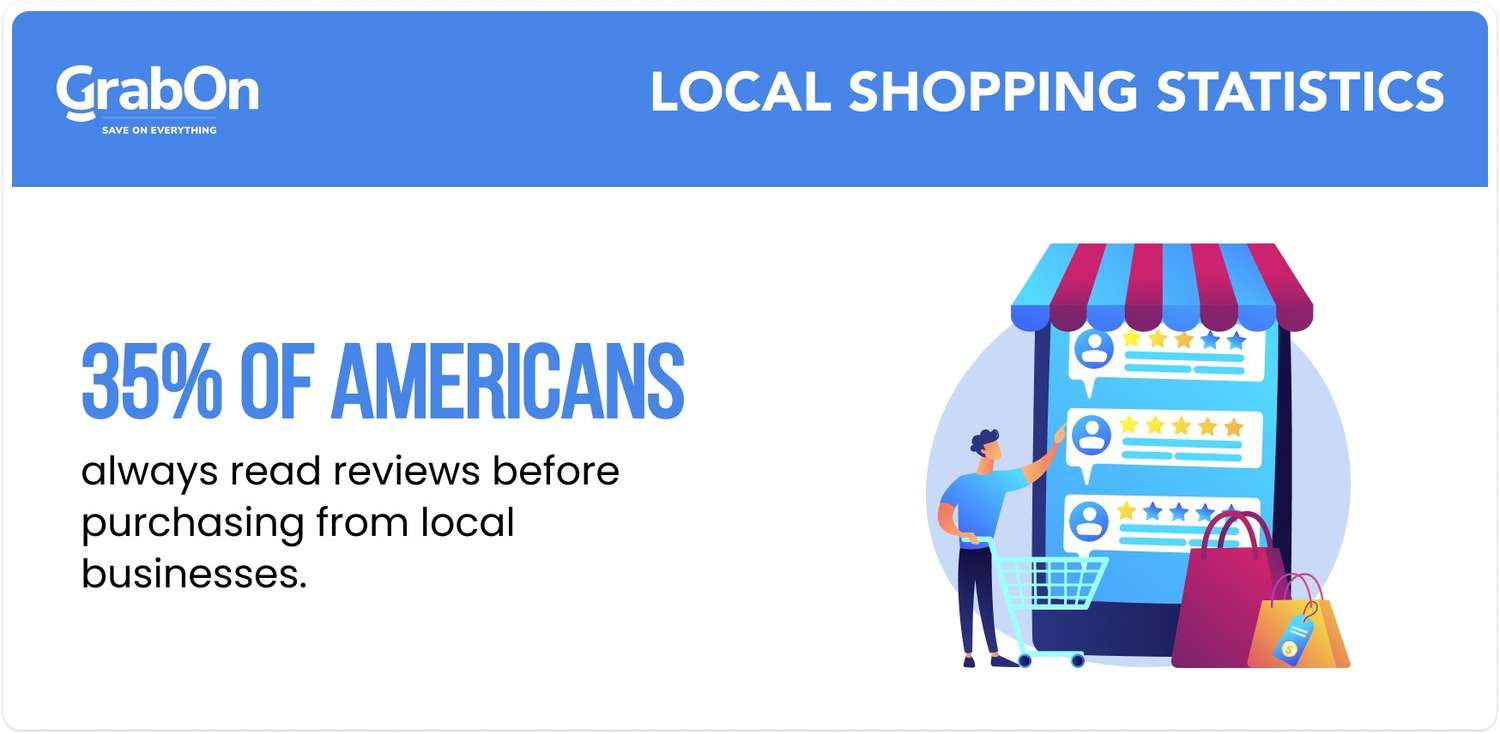
- In 2026, 35% of U.S. consumers always read reviews before visiting a local business, while 26% read them occasionally.
- Google continues to dominate as the leading platform for 85% of consumers to check local business reviews.
- Yelp has seen a steady decline in popularity, dropping from 53% in 2022 to 40% in 2026 as a platform for local shop reviews.
- Facebook usage for local business reviews has remained stagnant with a 45% usage rate from last 3 years.
- TripAdvisor experienced a slight incline since 2024, with 22% of consumers using it in 2026 to check feedback on local businesses.
- The Better Business Bureau (BBB) showed a slight decline, with 19% of consumers using it in 2026. Down from 20% in 2025.
Top platforms for checking reviews of local businesses:
| Platform | Consumers Checking Reviews | ||||
| 2022 | 2023 | 2024 | 2025 | 2026 | |
| 81% | 87% | 81% | 83% | 85% | |
| 48% | 46% | 45% | 45% | 45% | |
| Yelp | 53% | 48% | 44% | 44% | 40% |
| Tripadvisor | 36% | 29% | 21% | 22% | 22% |
| Better Business Bureau | 31% | 24% | 20% | 20% | 19% |
This reliance on reviews shows how digital trust supports local economies. Consumers want assurance that their community investments are worthwhile.
The Role of Video Content for Local Business Reviews
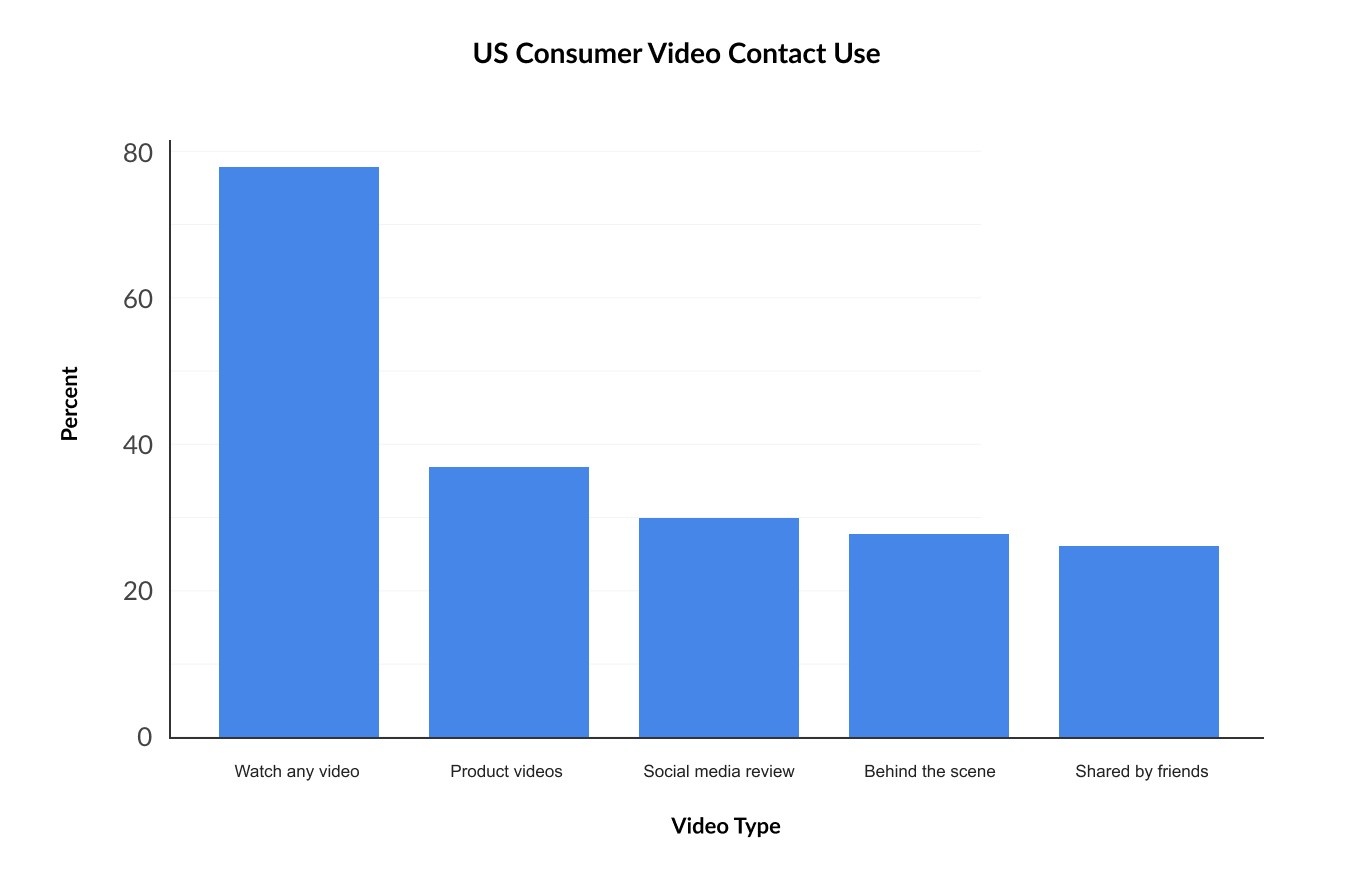
- Over 75% of U.S. consumers watch videos when researching local businesses:
- Around 36% of Americans watch product videos directly from businesses to understand their products better.
- Nearly 31% of buyers rely on social media video reviews, using them as a trusted source of feedback for local businesses.
- About 27% prefer behind-the-scenes video content, as it helps them connect with the local brand on a personal level.
- Nearly 26% watch videos of local businesses shared by friends, valuing peer recommendations and referrals.
Videos by brands bridge the gap between digital convenience and local authenticity, helping small businesses market themselves effectively.
(Source: Brightlocal)
Global Local Shopping Statistics
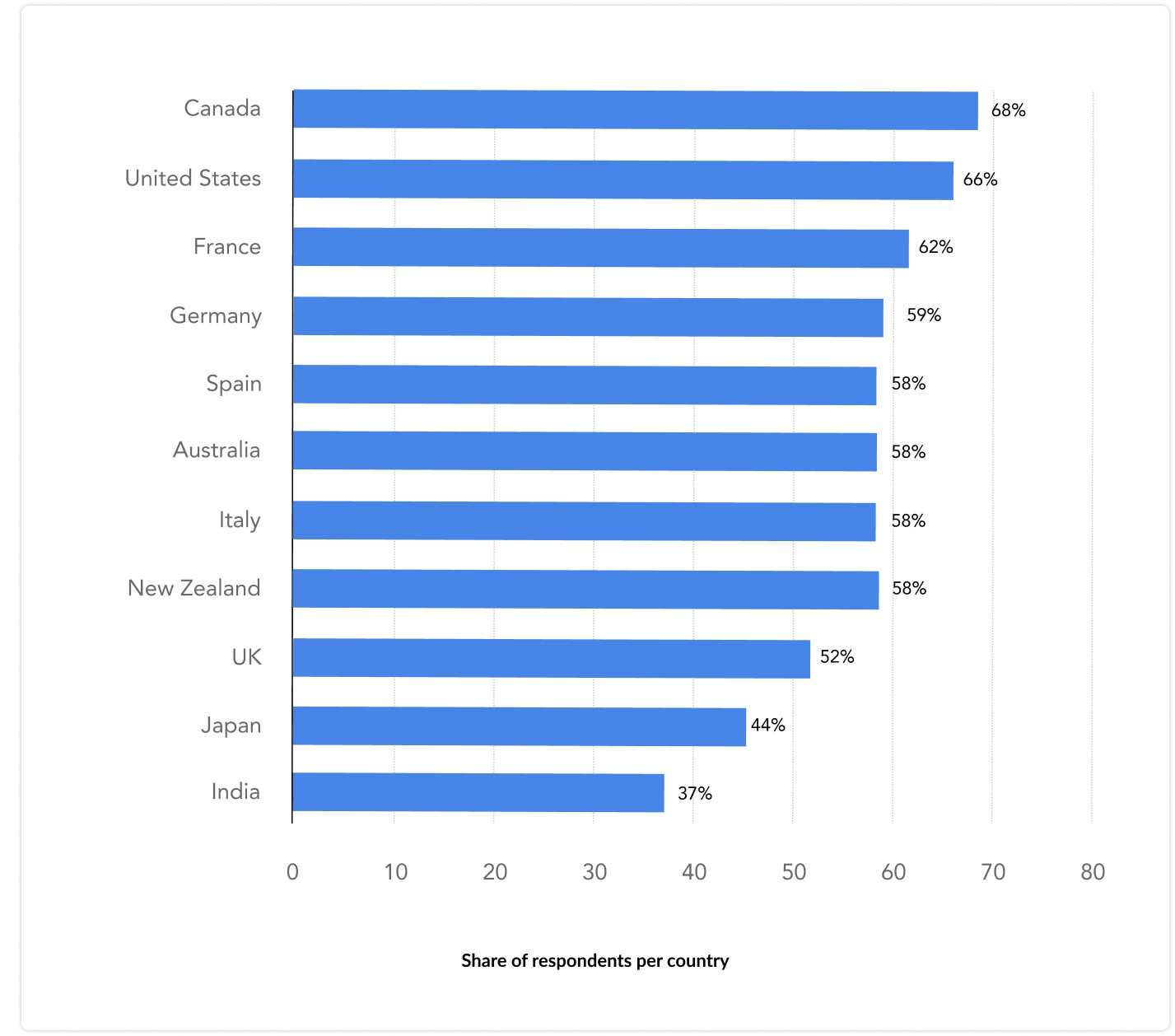
- In Canada, 68% of consumers primarily shop at local businesses (online or in-store) to support the local economy.
- In the United States, 66% of shoppers prioritize local businesses to strengthen their community’s economy.
- France has 62% of consumers who focus on shopping locally for economic support.
- In Germany, 59% of respondents prefer to shop at local businesses to help their local economy.
- Spain, Australia, Italy, and New Zealand each have 58% of consumers prioritizing local shopping.
- In the United Kingdom, 52% of consumers mainly shop locally to boost the local economy.
- In Japan, 44% of shoppers primarily support local businesses for economic reasons.
- India has the lowest share, with only 37% of consumers primarily shopping at local businesses to strengthen their local economy.
(Source: Statista)
Local Shopping and the LED (Local Economic Development) Model
According to the World Bank, LED is:
“…a process by which public, business, and non-governmental sector partners work collectively to create better conditions for economic growth and employment generation.”
The Local Economic Development (LED) Model is a bottom-up approach to community growth and resilience. Instead of relying solely on national or global initiatives, it focuses on empowering local communities to generate and sustain their economic activity.
The annual Buy Nearby economic study, conducted by the Michigan Retailers Association (MRA) and Public Sector Consultants (PSC), demonstrates how the LED model can make a difference. The report revealed that:
- Shifting just 10% of consumer spending to local retailers could boost Michigan’s economy by $1.5 billion.
- This change in shopping habits could also create 15,367 new jobs across Michigan.
- In addition, it would raise labor income by more than $690 million, contributing to stronger community growth and resilience.
In the future, multinational companies will need to adapt their products to local needs, source more regionally, and show communities why they are valuable. Meanwhile, local businesses must find a balance between keeping prices affordable and offering the unique benefits that set them apart from retail giants.
But the takeaway is clear: whether through digital tools, farmers’ markets, or Main Street shops, every dollar spent locally helps build a stronger, more sustainable community.
Frequently Asked Questions
Can I shop local online in the USA?
Yes, you can shop local online. Several websites or platforms connect consumers with small, independent, and regional businesses, such as Etsy, local chambers of commerce websites, and specific city-based online marketplaces. Many local shops also have e-commerce sites or social media stores.
Why do people say “shop local”?
People say “shop local” to encourage supporting small and community-based businesses instead of large chains or online giants. This phrase promotes awareness of the economic, social, and environmental benefits that come from supporting local entrepreneurs and economies.
What are some good local shops to buy gifts?
Some good local shops to buy gifts in the USA include independent bookstores like Politics and Prose (Washington, D.C.), artisanal shops like Heath Ceramics (California), handmade craft stores on Etsy, boutique food stores like The Spice House (Chicago), and local artisan markets or pop-up shops.
<a href=#The-Role-of-Video-Content-for-Local-Business-Reviews>The Role of Video Content for Local Business Reviews</p><li><a href=#Global-Local-Shopping-Statistics><b>Global Local Shopping Statistics</b></li><li><a href=#Local-Shopping-and-the-LED-(Local-Economic-Development)-Model><b>Local Shopping and the LED (Local Economic Development) Model</b></li><li><a href=#Frequently-Asked-Questions><b>Frequently Asked Questions</b></li></ul></div>